On September 20th, we had a "Walk and Talk" at the Regner Park Labyrinth. Mainly, we covered what's good about using a labyrinth as a spiritual discipline, why labyrinths can be controversial for Christian use, and some of the things to keep in mind when using a labyrinth or another form of prayer walking.
So what's good about it? First and foremost, labyrinths are a quiet form of prayer. Which means that you're forced to slow down, stop talking, and pay attention. That's not only the intention, but also the actual reality in many cases. Labyrinths are often done in community, or at the least, they're done with the option of others using the same space- when walking a labyrinth, you make the implied agreement that you won't talk with the other walkers and that you'll stay on the path in a respectful (and slow) manner. And because labyrinths have a set distance to walk, they're not a discipline that you can easily walk away from when things get tough or you get bored. If you do walk away, you're much more cognizant of it- it's a choice to stop the labyrinth, not just a gradual distraction. So this, in itself, forces you into focusing. Focused, quiet time set aside for communing with God is pretty much always a good thing!
But in addition to that, the labyrinth's set distance and it's winding shape are representative of human life. When you first walk it, you have no idea how long it will take you to get to the center. And just when you think you're getting close, your path turns and you start walking away. Depending on your tolerance for the uncertain, this can be wonderfully unexpected or incredibly frustrating, but it's an excellent mirror for how you view surprise bends in your own life.
There are a couple of different ways to use the labyrinth, depending on what you want to get out of it. First, you can use it as a simple, physical way to spend time with God. Some people have a hard time praying while sitting still (some people just need to be MOVING), and this is a great way to get over that barrier to prayer. You can pray the same way you might if you weren't using the labyrinth, but with more focus than if you were prayer walking around town (you don't need to watch for moving cars while praying in the labyrinth!). You can enter the labyrinth with the simple intention of time with God, allowing Him to reveal things to you through your surroundings, through your thought patterns, through your manner of walking. Or you can view the labyrinth through a more formal lens. As you walk toward the center, think of all your labels, all your roles, all of the descriptors of who you are to the outside world. Focus on setting it all aside, stripping them off one by one. When you get to the center of the labyrinth, surround yourself with the glory of God's love for you. Think about who you are in Christ, allow God to envelope you with His plan for your life, His descriptors, His love. When you are ready, travel back through the labyrinth, listening for how God wants you to take that peace, that message, that love you experienced in the labyrinth center and share it with the world. As you travel back to your regularly scheduled life, let God guide you in how to live out the specifics. And as you exit the labyrinth, give thanks to God for the experience.
It doesn't matter which method of labyrinth walking you choose- and you can choose to mix them up as you see fit. I'm sure that if you search for additional formal ways to walk the labyrinth, you'd find many other ways to think through it- the options listed above were simply the ones that I found when I was researching this activity. But it's important to note that labyrinth walking tends to produce different extremes in people. Some walk the labyrinth and think, "Is that it?" They feel it's an anticlimactic experience and that they didn't get much out of it. Others get so much out of it that they feel emotionally overwhelmed. It's NOT uncommon for people to cry while walking the labyrinth- but it's equally common for people to feel it wasn't an earth-moving experience for them. So don't feel weird if you have either of those reactions.
So that all sounds good, right? Or at the very least, benign? Why would anyone be against Christians using a labyrinth? I'll try to summarize it as best I can, but please keep in mind that any controversial issue has nuances that are hard to shorten. That said, the main concern with labyrinths is that they're not a strictly Christian practice and they predate Christianity by several hundred years. Though they've been found in Christian churches since the Middle Ages, they were first used as a pagan method of getting in touch with earthly spiritualities, and some people still use them as such- either in a new-agey, earth vibrations kind of way, or as a not so religious, atheistic or non-monotheistic form of meditation. So one of the biggest concerns that some Christians have with labyrinths is that they go against the scriptures that state Christians should have nothing to do with pagan traditions (Deuteronomy 4:2, Deut. 12:4 and 12:32). They also reference Matthew 15:8-9 and Mark 7:9, both of which have Jesus quoting Isaiah 29:13- though Jesus is quoting it in terms of putting the tradition of ceremonial washing above the commandments of God. Christians with this belief feel that unless a spiritual practice is listed in the Bible, it has no place in the Christian tradition. For them, to incorporate non-biblical practices and ideals into the Christian framework for experiencing God indicates that
A) the believer feels that God didn't give us enough (or "good enough") ways to experience Him, indicating a rejection of the standard Christian belief that Yaweh/God always provides everything you need
B) the believer puts more emphasis on human knowledge and traditions than on God-given requirements
C) a believer can "cherry-pick" from different religions (part of the everyone-must-find-their-own-truth mantra), rather than believing that Christianity is the only true path to everlasting life
and
D) a believer can change the nature of a thing by changing its purpose or its description (though a knife still has the ability to cut, even if it's being used as a hammer and a brunette is still fundamentally a brunette, no matter how many boxes of hair dye she uses.)
It's worth noting that Christians who object to using a pagan tradition such as a labyrinth as a way to experience God, often also reject the tradition of changing pagan celebrations into Christian celebrations for many of the same reasons. This primarily comes into focus during Easter and Christmas, with their refusal to celebrate with symbols such as Easter Eggs and Easter Bunnies (as those were both first used as pagan symbols of fertility as the spring celebration of the goddess Eostra) or Christmas trees and evergreen boughs (which were used to celebrate Saturnalia and Bacchus); instead they prefer to celebrate the Resurrection (NOT Easter) and if they celebrate Christmas, they choose a day that does not coincide with the pagan winter solstice celebrations. This could be a lengthy post in and of itself, though, so I'll leave it at that.
What do you think? Do you feel that labyrinths are a healthy, available spiritual practice that has the ability to help you deepen your faith? Or does their use actually indicate an incomplete faith in God- that the believer is casting about for anything that might help them fill a void? Or are you somewhere in between?
Tuesday, October 16, 2012

Monday, October 1, 2012
Hello all! Kaitlin Demmon shared these lovely pictures with me and so I thought I would share them with you:-)


Fun Chocolate eating contest:-)

Man I could not do that!

Scooping Ice Cream!
(like our tye die shirts?!?!)

Thank you all so much for your help!
We would not have done this without all of you!

So Hunter...would you do it again?

What a great group we are:-)
Thanks for a wonderful day!
Sunday, July 15, 2012
LIFEST!
I'll let the pictures speak for themselves!


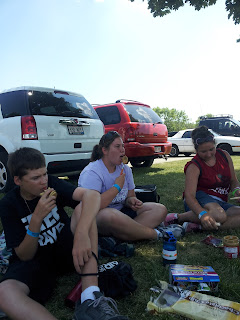


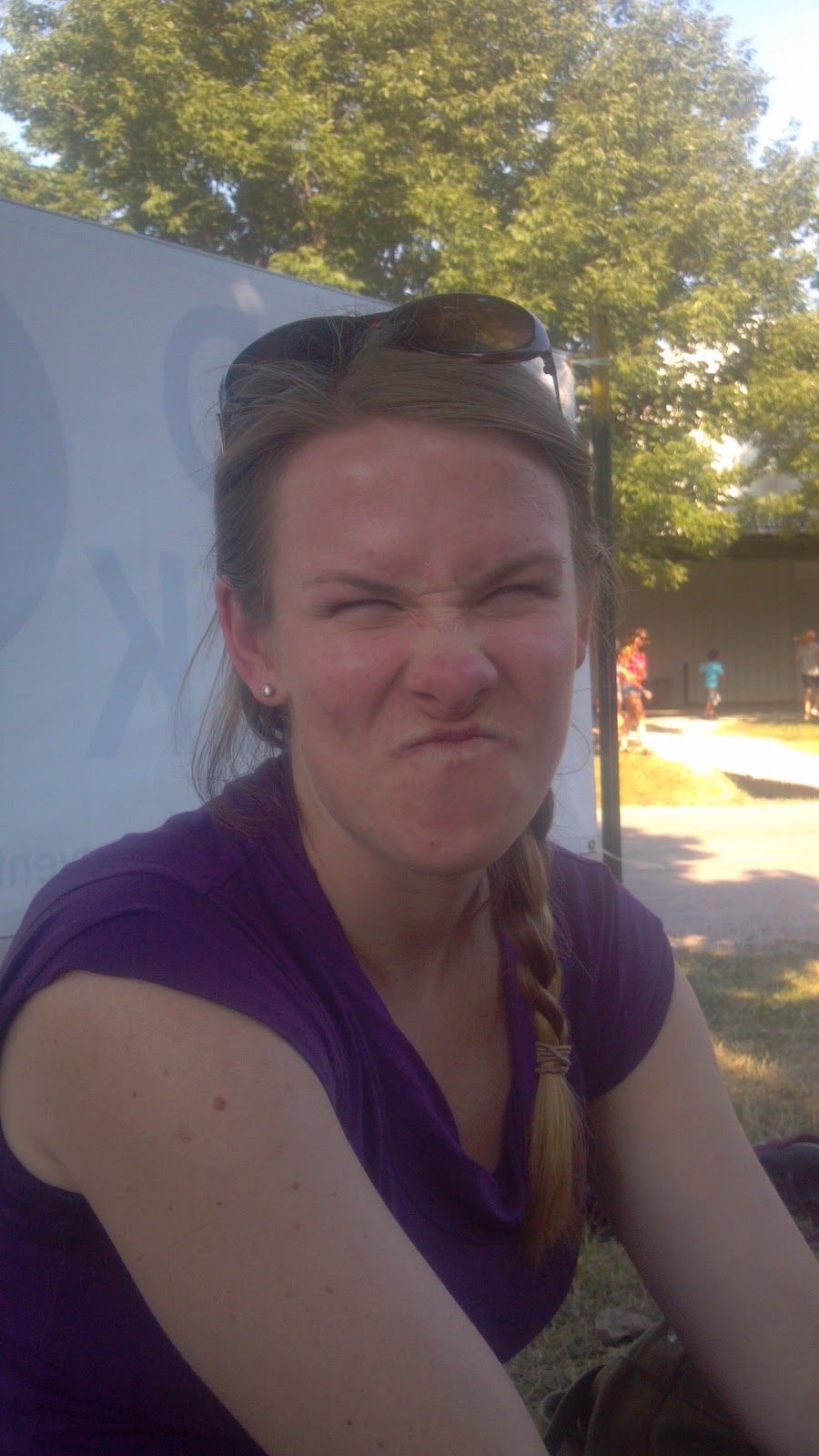


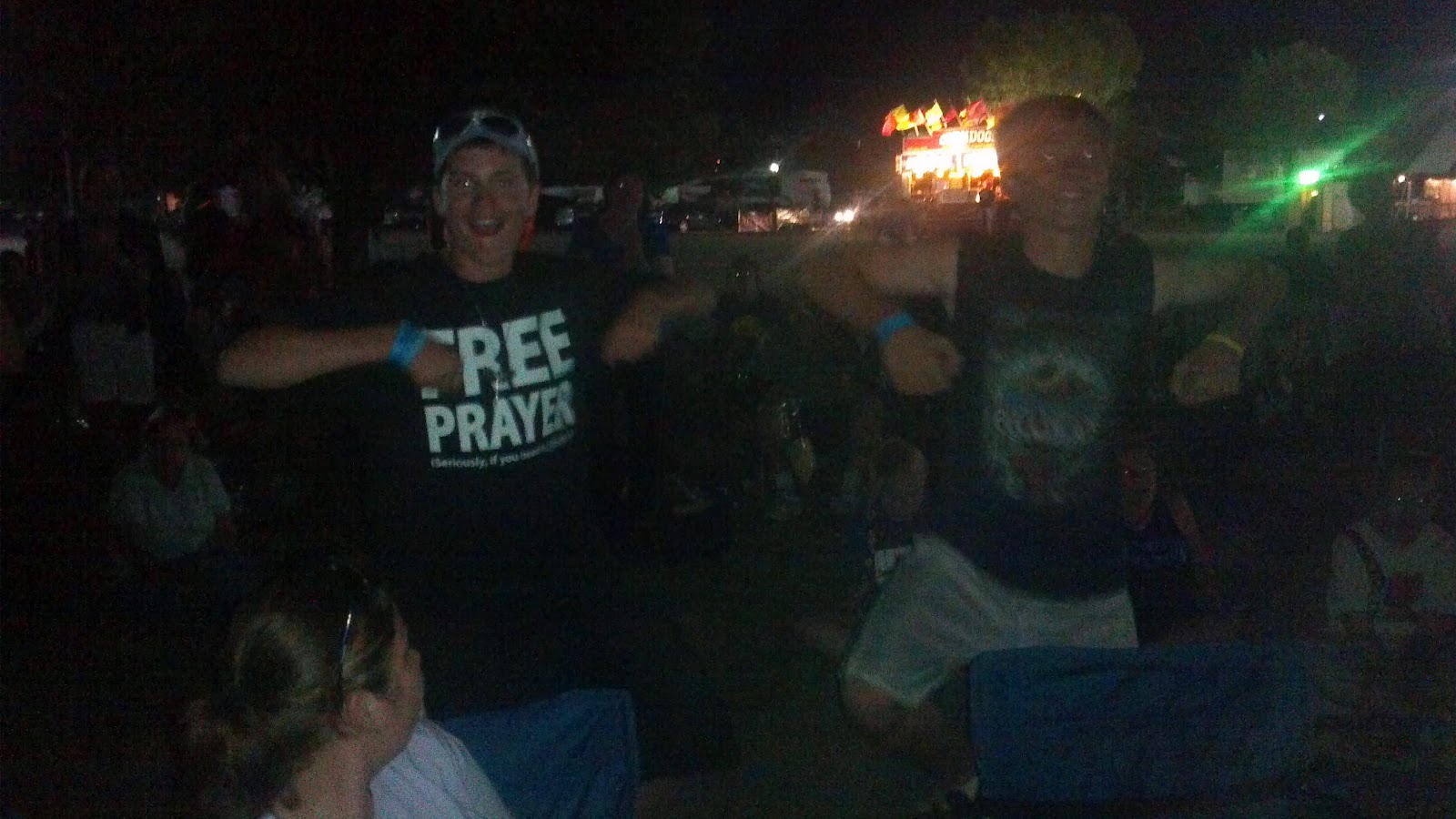
(Sorry, Pastor Rich- it was too good not to share!)
Tuesday, July 3, 2012
The Frying of the Brats
The brat fry was HOT in more ways that one! 10 youth/confirmands, 3 adults, and 91 degree temperatures away from the grill. We managed to stay hydrated, no one broke the #1 rule (no dying) AND we sold a LOT of brats. Even though it was a Friday (June 29th), our half of the total brat sales was $302 (meaning we sold over 200 brats at $3/each) and we made $82.50 in tips!


Pictures are by the lovely Jo. Sorry for anyone who got left out of the pictures I have (and though I'll call you out by name-- Jo, Spencer, RJ, Ali, and Kris-- some of you may be happier not having had your picture taken that day!). What do you guys think? Will we try another brat fry in the future?
Car Wash!
This is a picture heavy post, with a wee bit of information thrown in. Pictures are from the youth group/confirmation car wash held on June 16th, 2012 at the Immanuel UCC church parking lot. We started at 8 a.m. and went until about noon- ending early due to the gently falling rain. Between the car wash and the donation jar for the coffee in the "viewing area," we made $320! Give yourselves a giant pat on the back and plan to make this a more regular fundraiser, since it was so much fun!


Wednesday, April 25, 2012
Creeds- Specifically, the Apostles' Creed
What comes to mind when you see the word "creed?" There's a band out there named Creed, you know the church says them sometimes, and you vaguely remember covering something about them in Confirmation. What else is there? If you're a little confused as to why they're so important, keep reading. You're not alone!
The simple definition of a creed is that it's a summary of religious beliefs and understandings (or the codification of a system of beliefs, if you want to get fancy). When the early church was forming, reading and writing wasn't the easiest way to transmit information, and most people were illiterate anyways- people needed to share information orally, rather than just pointing their friends to a specific book or pamphlet (or bible verse). But if you've ever played telephone, you know how quickly messages can get distorted. In an effort to help new members understand what "The Way" (or Christianity) was all about, churches started creating lists of the bare minimum a new Christian had to accept and believe in order to be considered a Christian (and therefore, be able to be baptized into the church). They'd build on those lists through discipleship later. These lists were kept short and easy to understand, so that anyone -- not just the leaders of the church-- would be able to memorize them. It was also a way to test any new viewpoints that they heard- if someone preached a lesson that negated any part of the list, then they weren't following the teaching of the Apostles and they could be considered as false preachers.
But, contrary to popular belief, the apostles didn't actually write the Apostles' Creed. When they founded a new church, they gave that church all the basics of the faith given to them by Jesus (and eventually, they wrote the books of the New Testament that we're familiar with, as a way to help share that information even further than they could travel). The churches came up with their lists, based on the information from those first missionaries, and as they grew and started to interact, the churches found that they had pretty similar lists. Over the years, as Churches talked about the little differences, those lists melded into one list- what we know as the Apostles' Creed.
The first real written record of the "Apostles' " creed appears around A.D. 200- a pretty good amount of time after Jesus' death, and an even longer time away from the present. So why do we still care enough to recite creeds? Well there are a couple of reasons. One, it's a tie to our history as a church and a way to continue a tradition that's almost as old as Christianity itself. Creeds ground us in our faith- if what we believe is different than what the earliest Christians believed, one of us has gone down a different path than Jesus taught (and guess what? It's probably not those other guys). Second, it's still a way for us to verify the authenticity of other churches- do they have the same basic beliefs as us? If the same core principals are there, we can still be Christians together and have differing opinions on some of the smaller stuff. And finally, one of the main reasons Christians cared so much about getting the core beliefs right still remains today in some parts of the world.
The early church experienced a LOT of persecution- Jesus followers could literally die for their beliefs. If it's going to cost you your life, wouldn't you want to make sure that your beliefs hold water and aren't the philosophical ramblings of someone who had just heard about a guy named Jesus? Although our lives are pretty safe here in the U.S. (you might lose a friend because of your beliefs, but your head is probably going to stay connected to your neck), persecution of Christians remains in other parts of the world. To them, they have the same life-or-death need to verify the authenticity of their faith- and when we recite the same creed they recite, it's not only a symbolic tie, but an actual, in-the-words tie to other believers.
So what does this creed actually say? As you read it, see if there are any shadows of memorization in the back of your head (make Mrs. O proud!)...
Besides giving us a framework for understanding our faith, there's even more to find in those three paragraphs! Take a deep breath, turn off the TV and try to stay with me- and I'll try not to get bogged down in the details.
The first statement (God the Father Almighty...) was either an easily acceptable truth or a bold new statement, depending on the audience. Jews would accept that as old news and keep going; non-Jews (who often had different gods for different seasons, actions, etc.) would have to first come around to a monotheistic view of the world before proceeding to the second paragraph.
Jesus' information then comes in chronological order- an abbreviated version of his story. Some important things to highlight, though, are that he is the only son of God (unlike Zeus and Hera having multiple children), and that it was an immaculate conception- both God and Human at once (*ahem* this issue will turn up in a later creed).
And Pontius Pilate- why is he in there? Because his name gives a definable timetable- Jesus isn't just some mystic, mysterious person from the past, unverifiable. Just like we'd recognize the timeframe of President Bush or President Kennedy, early Christians could go back and actually look up the events that occurred during the years Pilate was in power. Also, ascended and descended are power terms- Jesus chose death, and conquering it, chose heaven. And the final two sentences give importance to the previous actions- Jesus still IS and will be back again. And ain't nobody, dead or alive, gonna get by Him.
The final paragraph is kind of a summary of the rest of the basics. The Holy Spirit isn't really explored, just that there IS a Holy Spirit. But mostly I want to address the words between the first and second commas. The "holy catholic church" part is based off the Greek word kat' holos, which means "according to the whole." It does not reference the Roman Catholic church, and some versions of the Apostle's creed have simply replaced catholic with the word universal to avoid the confusion. But wait! There's more! The "universal" church is also a call to remember that we are all connected- remember that statement about the persecuted Christians from a couple paragraphs ago? If we believe this statement, we ought to think about how we'd react to know that someone from OUR church is being persecuted (or going hungry or being oppressed). This short statement is part warm-fuzzy, part rallying cry. It's a call to move beyond our immediate selves and see the entire faith community as equally important as those right in front of us.
So think about what this all means for you. There's a lot in those 114 words. Do you believe them? All of them? Why? Do you use them to help guide you when you're listening to what others hold up as true? Do they shape how you read the bible (is it God's truth and commandments, or just a guide to good living?)?
As you think, take a minute and listen to the two links. Yes, it was a very musical Sunday- the first link is our 5 minutes of God-time song, and the second is one of my new favorite songs. And that's all the information you get on them; I'm not even gonna tell you the song names or artists. :)
http://www.youtube.com/watch?v=MKMGVgOkTkw
http://www.youtube.com/watch?v=mxEFqjH9G9Y&feature=related
See you next week!
The simple definition of a creed is that it's a summary of religious beliefs and understandings (or the codification of a system of beliefs, if you want to get fancy). When the early church was forming, reading and writing wasn't the easiest way to transmit information, and most people were illiterate anyways- people needed to share information orally, rather than just pointing their friends to a specific book or pamphlet (or bible verse). But if you've ever played telephone, you know how quickly messages can get distorted. In an effort to help new members understand what "The Way" (or Christianity) was all about, churches started creating lists of the bare minimum a new Christian had to accept and believe in order to be considered a Christian (and therefore, be able to be baptized into the church). They'd build on those lists through discipleship later. These lists were kept short and easy to understand, so that anyone -- not just the leaders of the church-- would be able to memorize them. It was also a way to test any new viewpoints that they heard- if someone preached a lesson that negated any part of the list, then they weren't following the teaching of the Apostles and they could be considered as false preachers.
But, contrary to popular belief, the apostles didn't actually write the Apostles' Creed. When they founded a new church, they gave that church all the basics of the faith given to them by Jesus (and eventually, they wrote the books of the New Testament that we're familiar with, as a way to help share that information even further than they could travel). The churches came up with their lists, based on the information from those first missionaries, and as they grew and started to interact, the churches found that they had pretty similar lists. Over the years, as Churches talked about the little differences, those lists melded into one list- what we know as the Apostles' Creed.
The first real written record of the "Apostles' " creed appears around A.D. 200- a pretty good amount of time after Jesus' death, and an even longer time away from the present. So why do we still care enough to recite creeds? Well there are a couple of reasons. One, it's a tie to our history as a church and a way to continue a tradition that's almost as old as Christianity itself. Creeds ground us in our faith- if what we believe is different than what the earliest Christians believed, one of us has gone down a different path than Jesus taught (and guess what? It's probably not those other guys). Second, it's still a way for us to verify the authenticity of other churches- do they have the same basic beliefs as us? If the same core principals are there, we can still be Christians together and have differing opinions on some of the smaller stuff. And finally, one of the main reasons Christians cared so much about getting the core beliefs right still remains today in some parts of the world.
The early church experienced a LOT of persecution- Jesus followers could literally die for their beliefs. If it's going to cost you your life, wouldn't you want to make sure that your beliefs hold water and aren't the philosophical ramblings of someone who had just heard about a guy named Jesus? Although our lives are pretty safe here in the U.S. (you might lose a friend because of your beliefs, but your head is probably going to stay connected to your neck), persecution of Christians remains in other parts of the world. To them, they have the same life-or-death need to verify the authenticity of their faith- and when we recite the same creed they recite, it's not only a symbolic tie, but an actual, in-the-words tie to other believers.
So what does this creed actually say? As you read it, see if there are any shadows of memorization in the back of your head (make Mrs. O proud!)...
I believe in God, the Father almighty, creator of heaven and earth.
I believe in Jesus Christ, his only Son, our Lord. He was conceived by the power of the Holy Spirit and born of the Virgin Mary. He suffered under Pontius Pilate, was crucified, died, and was buried. He descended to the dead. On the third day he rose again. He ascended into heaven, and is seated at the right hand of the Father. He will come again to judge the living and the dead.
I believe in the Holy Spirit, the holy catholic Church, the communion of saints, the forgiveness of sins, the resurrection of the body, and the life everlasting. Amen.
Besides giving us a framework for understanding our faith, there's even more to find in those three paragraphs! Take a deep breath, turn off the TV and try to stay with me- and I'll try not to get bogged down in the details.
The first statement (God the Father Almighty...) was either an easily acceptable truth or a bold new statement, depending on the audience. Jews would accept that as old news and keep going; non-Jews (who often had different gods for different seasons, actions, etc.) would have to first come around to a monotheistic view of the world before proceeding to the second paragraph.
Jesus' information then comes in chronological order- an abbreviated version of his story. Some important things to highlight, though, are that he is the only son of God (unlike Zeus and Hera having multiple children), and that it was an immaculate conception- both God and Human at once (*ahem* this issue will turn up in a later creed).
And Pontius Pilate- why is he in there? Because his name gives a definable timetable- Jesus isn't just some mystic, mysterious person from the past, unverifiable. Just like we'd recognize the timeframe of President Bush or President Kennedy, early Christians could go back and actually look up the events that occurred during the years Pilate was in power. Also, ascended and descended are power terms- Jesus chose death, and conquering it, chose heaven. And the final two sentences give importance to the previous actions- Jesus still IS and will be back again. And ain't nobody, dead or alive, gonna get by Him.
The final paragraph is kind of a summary of the rest of the basics. The Holy Spirit isn't really explored, just that there IS a Holy Spirit. But mostly I want to address the words between the first and second commas. The "holy catholic church" part is based off the Greek word kat' holos, which means "according to the whole." It does not reference the Roman Catholic church, and some versions of the Apostle's creed have simply replaced catholic with the word universal to avoid the confusion. But wait! There's more! The "universal" church is also a call to remember that we are all connected- remember that statement about the persecuted Christians from a couple paragraphs ago? If we believe this statement, we ought to think about how we'd react to know that someone from OUR church is being persecuted (or going hungry or being oppressed). This short statement is part warm-fuzzy, part rallying cry. It's a call to move beyond our immediate selves and see the entire faith community as equally important as those right in front of us.
So think about what this all means for you. There's a lot in those 114 words. Do you believe them? All of them? Why? Do you use them to help guide you when you're listening to what others hold up as true? Do they shape how you read the bible (is it God's truth and commandments, or just a guide to good living?)?
As you think, take a minute and listen to the two links. Yes, it was a very musical Sunday- the first link is our 5 minutes of God-time song, and the second is one of my new favorite songs. And that's all the information you get on them; I'm not even gonna tell you the song names or artists. :)
http://www.youtube.com/watch?v=MKMGVgOkTkw
http://www.youtube.com/watch?v=mxEFqjH9G9Y&feature=related
See you next week!
Sunday, April 1, 2012
Palm Sunday
There's not a ton to write about today, but I'll summarize for anyone who missed it. It was the last day to buy tickets for the Easter Breakfast, and we'll be serving quite a few people (think 150 range). I think that's a pretty successful number for our first attempt at this breakfast! Thank you all for helping to sell the tickets and for being so excited about the idea of improving the life of another through Heifer International. God is at work doing good things through this breakfast.
Thank you, as well, for helping guide the JAM Time kids this morning as they waved palms at second service. It was fun, and very cute, and I know those kids look up to you!
We had our five minutes of God time (links below) and then helped with the placemat making going on in the Fellowship Hall. I'm pretty excited about seeing what the kids all came up with- and you guys had some lovely drawings, too. Aren't you proud? :)
Hopefully, I'll see you at Maundy Thursday service (7pm) or Good Friday service (noon), but otherwise, we'll be meeting at the church on Saturday at 9am and going until noon. I can give a ride if you need one, just let me know.
Happy Easter week!
Link love from today's youth group:
Thank you, as well, for helping guide the JAM Time kids this morning as they waved palms at second service. It was fun, and very cute, and I know those kids look up to you!
We had our five minutes of God time (links below) and then helped with the placemat making going on in the Fellowship Hall. I'm pretty excited about seeing what the kids all came up with- and you guys had some lovely drawings, too. Aren't you proud? :)
Hopefully, I'll see you at Maundy Thursday service (7pm) or Good Friday service (noon), but otherwise, we'll be meeting at the church on Saturday at 9am and going until noon. I can give a ride if you need one, just let me know.
Happy Easter week!
Link love from today's youth group:
- New Again by Brad Paisley and Sarah Evans
- 2nd Choice (that we didn't listen to) was Via Dolorosa by Marco Mendoza. It's a beautiful song, but fair warning- the video does have some more graphic images from the Passion of the Christ movie.
Subscribe to:
Posts (Atom)